Soil Evaluation & Site Planning
Before anyone can tell you what a system costs, someone has to find out what your ground will accept.
Serving Youngsville, Louisburg, Franklinton, Wake Forest, Bunn
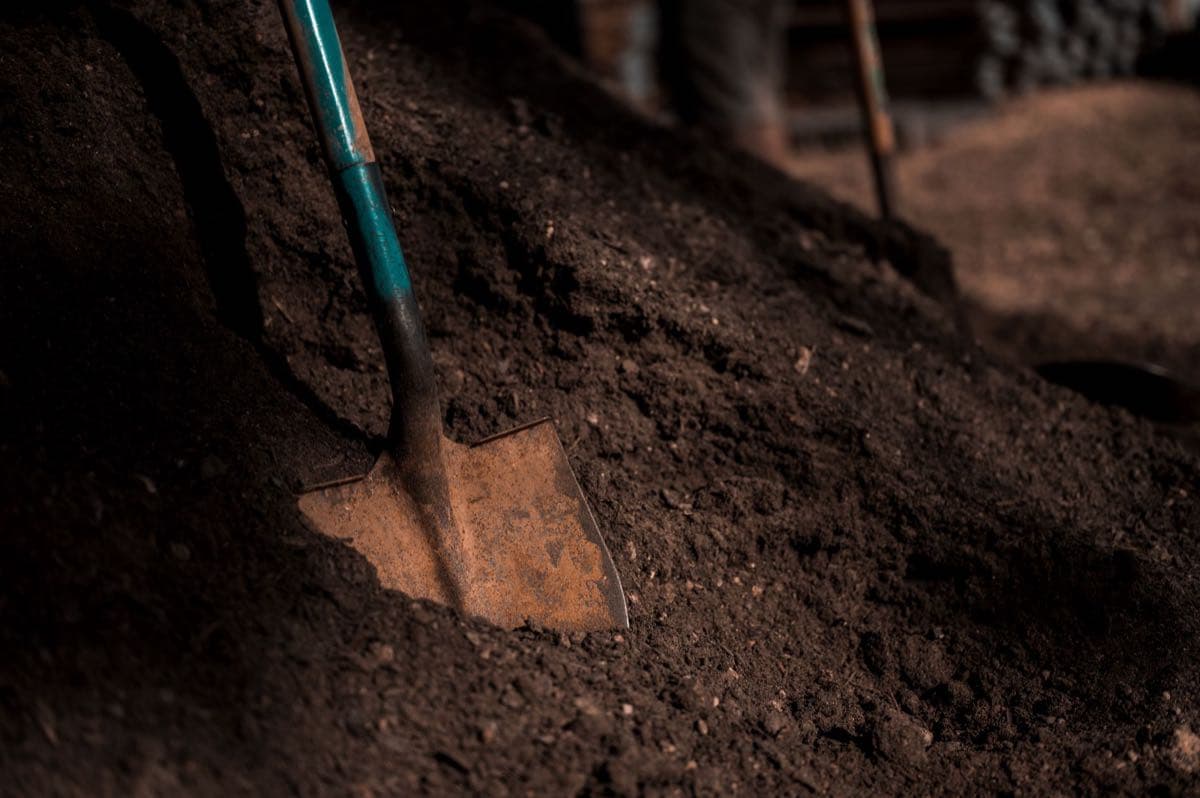
Everything else on this site depends on this step. North Carolina classifies sites as suitable or unsuitable for on-site wastewater based on a hands-on evaluation of the actual soil: its morphology, how wet it gets and how deep, how far down to rock or saprolite, whether restrictive horizons block downward movement, and how much usable space the parcel offers.
Homeowners often call this a perc test, and the term persists, but the state's framework is a soil and site evaluation rather than a simple percolation measurement. It's done by digging or boring into the ground and reading it — which is why nobody can do it from a desk, a map, or a neighbor's results.
The practical consequence is that the evaluation determines your system type, and your system type determines your budget. A site that classifies well may support a conventional gravity system. A marginal site may need pressure dosing, drip dispersal, or advanced pretreatment — all codified options in the state rules, all more expensive to install and to operate. This is the number that should exist before you commit to a lot.
Common requests
- Evaluating a parcel before making an offer on it
- Determining how many bedrooms a lot can support
- Locating the best system area before siting the house
- Re-evaluating a lot whose old permit has expired or predates current rules
- Assessing whether a reserved repair area is still usable
- Planning around wells, property lines, and surface water setbacks
Signs it's time
- You're considering land with no permit history on file
- A listing says 'perc test needed' or offers no septic documentation
- Your house plan has grown and you're unsure the system can keep up
- A previous evaluation was done years ago under different rules
Good to know
- Do this before you buy, if you possibly can. A parcel nobody has evaluated is a parcel where nobody has confirmed a house can be built.
- Setbacks eat usable space fast — 100 feet from a shared well, 50 from a private one, 50 from most streams and ponds, 10 from property lines. On a small or oddly shaped lot these constraints, not soil quality, may be the binding limit.
- The evaluation has to account for the repair area too, not just the initial system. Both must fit on land you own or control.
- An old permit on file is useful information but not a guarantee. Rules change and site conditions change; confirm its current standing with the county.
- North Carolina also allows private-professional routes — the Engineer Option Permit and the Authorized On-Site Wastewater Evaluator — which some owners use on larger or time-sensitive projects.
Soil Evaluation & Site Planning — frequently asked questions
Is a perc test the same thing as a soil evaluation?
In casual conversation people use them interchangeably, but they aren't quite the same. A percolation test measures how fast water drains from a test hole. North Carolina's framework is broader — the evaluation reads soil morphology, wetness condition, depth, saprolite, and restrictive horizons, and classifies the site on that basis. If someone offers you a quick perc test as the whole answer for a new system in NC, ask how it maps to the state's site classification.
How many bedrooms will my lot support?
That's precisely what the evaluation determines, and it's the question worth asking early because it constrains your house design. Design flow is calculated per bedroom, so the soil's capacity translates fairly directly into a bedroom count. People routinely discover their land supports three bedrooms when they had drawn four — much better to learn that during design than after.
Can I use my neighbor's results as a guide?
Only as a very rough one. Soil changes over remarkably short distances — depth to a restrictive horizon can differ substantially between two points on the same parcel, let alone across a property line. Neighborhood results tell you what's plausible in the area. They tell you nothing binding about your ground, and the permit will be issued on your ground.
What if I disagree with the county's classification?
There are formal routes. The state rules provide for variances in defined circumstances, and the Engineer Option Permit and Authorized On-Site Wastewater Evaluator pathways let a licensed private professional perform evaluation and design work. Those add cost and don't lower the technical standard, but they're legitimate options on a site where the stakes justify them. Start by asking the county to walk you through what drove the classification.
Get an estimate for soil evaluation & site planning
Describe what you're seeing, attach photos if you have them, and get a clear next step — with no obligation.